
Brass Moulding Inserts in Lebanon
Introduction
Established in 2002, NMD EXIM has grown into a trusted manufacturer, supplier, and exporter of premium brass components worldwide. Over the years, we have continuously expanded our product range, combining innovation with precision engineering to meet the evolving needs of our clients.
Precision, durability, and dependability are not only desirable but also necessary in today’s cutthroat production environment. Brass moulding inserts stand out as essential components in a variety of applications among the various designed parts that keep contemporary industries operating efficiently. These tiny yet powerful parts are essential for maintaining structural integrity and long-lasting performance in anything from automobile assemblies to electronics and industrial polymers. We at NMD EXIM are pleased to provide superior brass moulding inserts that adhere to international standards in order to assist Lebanon’s industrial sectors. We are the best Brass Moulding Inserts Manufacturer.
What Are Brass Moulding Inserts
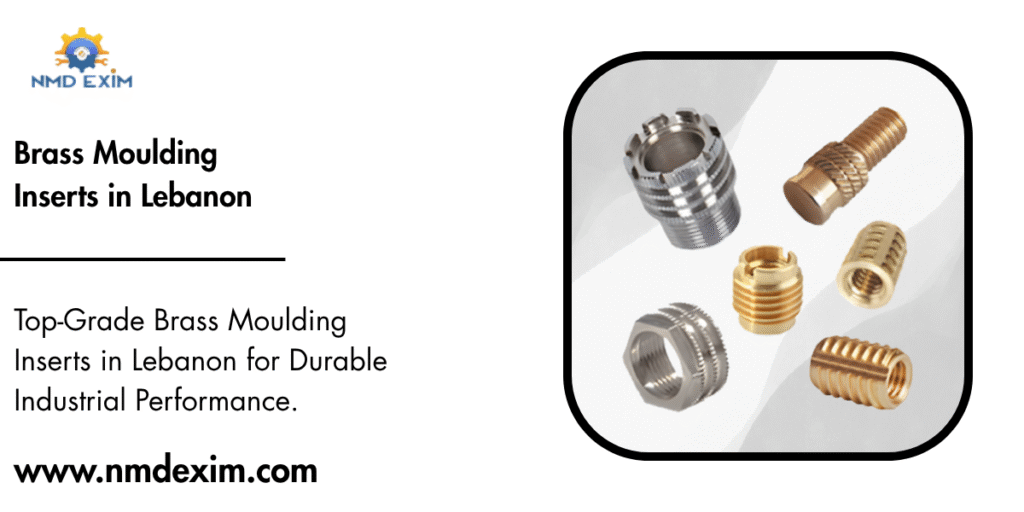
Brass moulding inserts are threaded metal parts intended to be included in composite, rubber, plastic, or wood during the moulding process. Once inserted, they offer robust, reusable threads that enable bolts and screws to be firmly secured without removing the softer host material. Because of its superior machinability, corrosion resistance, thermal conductivity, and mechanical strength, brass is the material of choice for these implants. We are the best Brass Moulding Inserts Supplier.
These inserts can be manufactured in a variety of shapes, sizes, and installation types — including press-fit, ultrasonic, heat-fit, and self-tapping designs — to suit specific application requirements. Brass moulding inserts offer exceptional performance in applications where dependability is crucial, such as consumer goods, automotive parts, electronic housings, and injection-moulded plastic components.
Why Choose NMD EXIM
1. Exceptional Strength and Thread Reliability
- One of the main reasons to choose brass moulding inserts is their ability to create strong, wear-resistant threads in materials like plastics and composites that otherwise can strip or fail under load. The brass material provides a metallic thread surface that can withstand repeated assembly and disassembly without degrading, making it ideal for products that require servicing or maintenance.
2. Superior Durability and Longevity
- Brass, as a material, is inherently durable and resistant to wear, corrosion, and environmental factors. This makes brass moulding inserts a long-lasting solution for parts exposed to moisture, temperature changes, or frequent use. Their corrosion resistance helps maintain performance over time, an important consideration for industries such as automotive, electronics, and consumer goods.
3. Excellent Thermal and Electrical Conductivity
- Brass has good thermal and electrical conductivity, which can be beneficial in applications where heat dissipation or electrical grounding is required. This makes brass moulding inserts particularly suitable for electrical housings, connectors, and electronic assemblies where maintaining proper thermal and electrical performance is critical.
4. Versatility Across Industries
- Brass moulding inserts are used in a wide range of sectors — from automotive and aerospace to furniture, consumer electronics, and industrial equipment. Their adaptability means they can be specified for various thread types, sizes, and installation methods (such as mould-in, heat-set, press-fit, or ultrasonic insertion), giving engineers flexibility in design and manufacturing.
5. Ease of Installation and Manufacturing Efficiency
- Brass inserts can be integrated during the injection moulding process or installed afterwards with heat or press tools. This flexibility helps manufacturers streamline production, reduce post-moulding operations, and improve assembly efficiency — especially important in competitive manufacturing environments.
6. Cost-Effectiveness Over Time
- While brass moulding inserts may have a higher initial material cost compared to some alternatives, their durability, corrosion resistance, and reduced maintenance needs often lead to lower total lifecycle costs. Investing in quality inserts can mean fewer replacements and better product longevity, a strong value proposition for manufacturers and end users alike.
7. Aesthetic and Functional Quality
- In applications where the appearance of threaded connections matters — such as consumer products or visible assemblies — brass inserts offer a clean, professional finish. Their metallic look and precision machining can enhance both the functional quality and visual appeal of the final product.
8. Aesthetic and Functional Finish
- In applications where the appearance of the final product matters e.g., consumer goods or visible fixtures, brass inserts can be fitted flush with the surface and maintain a clean, professional look while still delivering strength and functionality.
9. Thermal and Electrical Conductivity
- Brass offers good thermal and electrical conductivity, which can be beneficial in applications where heat dissipation or electrical grounding is required. This makes brass inserts particularly suitable for electrical housings, connectors, and components that must maintain stable electrical performance.
10. Aesthetic and Functional Integration
- Because brass inserts can be moulded flush with the surface and provide a clean finish, they help maintain both functionality and product aesthetics. This is important in consumer goods or visible components where the appearance matters as much as performance.
11. Corrosion & Environmental Resistance
- Brass naturally resists corrosion, rust, and degradation in environments exposed to moisture or chemicals. This resistance helps maintain the integrity and longevity of products, especially in industrial, automotive, and outdoor applications, where environmental exposure is common.
Applications of Brass Moulding Inserts
1. Automotive Industry
- In automotive manufacturing, components must endure vibration, temperature fluctuations, and mechanical stress. Brass moulding inserts provide robust threaded connections in plastic parts used for dashboards, engine components, electrical housings, and interior fittings. Their resistance to corrosion and mechanical wear makes them indispensable in automotive assemblies.
2. Electronics and Electrical Devices
- From consumer electronics to industrial electrical equipment, brass moulding inserts are widely used to provide secure mounting points for screws and fasteners. They ensure electrical enclosures, circuit boards, and plastic housings maintain structural integrity over time. Their excellent conductivity and corrosion resistance also make them suitable for components that may encounter varying environmental conditions.
3. Industrial Machinery and Equipment
- Industrial machinery often includes components made from plastics or composites. Brass moulding inserts enable these parts to be assembled with metal fasteners, improving the strength and durability of joints. In heavy-duty machinery, where reliability is crucial, brass inserts help reduce maintenance needs and extend service life.
4. Consumer Goods and Appliances
- Household appliances, power tools, and other consumer products frequently incorporate brass moulding inserts to ensure secure assembly of parts. These inserts enhance product longevity and reduce the likelihood of failures due to stripped threads or weakened joints.
5. Plastic Moulded Products
- In plastic injection moulding processes, brass inserts can be moulded into the part during production or installed post-moulding to offer threaded features. These are essential in consumer products, industrial housings, and structural components.
6. Furniture & Woodworking
- Brass press-in or threaded inserts are commonly used in furniture manufacturing to allow repeated assembly and disassembly without degrading the wood or composite materials. These inserts enable stronger joints and longer product life.
7. Industrial Equipment & Machinery
- Industrial machinery components that integrate plastic or lightweight parts benefit from brass inserts’ strength and thermal stability. Whether for fixtures, housings, or maintenance access panels, brass inserts provide secure fastening points.
8. Plastic Injection Moulding
- One of the most common applications for brass moulding inserts is in plastic injection moulding. During the injection process, brass inserts are placed into the mould so that molten plastic flows around them. The result is a part with strong, embedded threads capable of handling mechanical loads. This method is widely used in manufacturing electronics housings, automotive plastic components, and industrial enclosures.
9. Electronics and Electrical Components
- Electrical devices and communication equipment often house delicate components within plastic casings. Brass moulding inserts enable secure mounting of circuit boards, panels, and connectors. Their electrical conductivity also adds value where grounding or electrical contact is needed.
10. Communication Equipment
- Telecommunication devices and network hardware often use plastic moulded parts with embedded brass inserts to mount circuit boards, connectors, and structural components. The precision and stability of brass threads are essential for these high-tech applications.
Table of Specifications Brass Moulding Inserts
| Specification | Description |
|---|---|
| Material | Heat Staking, Ultrasonic, Press-In, Mould-In |
| Thread Type | Metric / Imperial |
| Thread Sizes | M2, M3, M4, M5, M6, 1/4″, 3/8″ |
| Outer Diameter Range | 2 mm – 20 mm |
| Length Range | 3 mm – 30 mm |
| Surface Finish | Natural / Polished / Golden |
| Installation Methods | Heat Staking, Ultrasonic, Press-In, Mold-In |
| Tolerance | ±0.05 mm (typical) |
| Applications | Automotive, Electronics, Industrial, Consumer Goods |
Benefits of Brass Moulding Inserts
1. Exceptional Durability and Strength
- Brass moulding inserts are crafted from high-grade brass alloys that offer superior strength and long service life. These inserts are designed to resist wear and deformation, even under repeated mechanical stress, ensuring that threaded connections remain secure over time.
2. Excellent Corrosion Resistance
- One of the standout advantages of brass is its natural resistance to corrosion. Unlike steel or aluminum, brass does not rust easily, making it ideal for applications exposed to moisture, chemicals, or outdoor environments. This property is particularly valuable in Lebanon’s coastal and humid regions, where corrosion can be a significant challenge.
3. Precision Threading for Reliable Fastening
- Brass moulding inserts provide precise internal threading, which allows for secure fastening with bolts and screws. This precision ensures consistent assembly quality, reduces the risk of stripping threads, and enhances the overall reliability of the final product.
4. Versatility Across Materials
- Whether the base material is plastic, wood, or composite, brass moulding inserts can be adapted to various installation methods such as mould-in, press-in, heat-set, or ultrasonic insertion. This versatility makes them suitable for a wide range of manufacturing processes and product designs.
5. Thermal and Electrical Conductivity
- Brass offers good thermal and electrical conductivity, which is advantageous in applications involving electrical components or thermal management. This makes brass inserts ideal for use in electronics, connectors, and power equipment assemblies.
6. Cost-Effectiveness and Long-Term Value
- While brass inserts may have a slightly higher upfront cost compared to some alternatives, their long-term durability, low maintenance, and reduced risk of failure translate into cost savings over the product lifecycle. Manufacturers in Lebanon benefit from fewer warranty claims, reduced rework, and improved customer satisfaction.
7. Resistance to Corrosion and Wear
- Brass naturally resists oxidation and corrosion, which helps maintain thread integrity and component performance in harsh environments, such as coastal or industrial zones — a valuable trait for products used in Lebanon’s diverse climatic conditions.
8. Corrosion Resistance
- Brass naturally resists corrosion, making these inserts suitable for environments where moisture or chemicals are present. For industries like marine equipment manufacturing, plumbing fixtures, or outdoor electronics, this corrosion resistance translates into longer service life and reduced maintenance costs.
9. Enhanced Assembly Performance
- Unlike direct threading in plastic or soft materials — which can strip or wear out — brass moulding inserts offer stable, secure threads. This reduces assembly errors and improves consistency across production batches. It also enables multiple assembly and disassembly cycles without degradation of thread quality.
Types of Brass Moulding Inserts
1. Heat-Set Inserts
- Heat-set inserts are designed to be installed into thermoplastic materials using controlled heat. The insert is heated and pressed into a pre-formed hole in the plastic. As the plastic melts around the knurled surface of the insert and cools, a secure mechanical bond is formed.
Benefits:
- Strong mechanical retention
- Minimal stress on the host material
- Suitable for automated production environments
2. Ultrasonic Inserts
- Ultrasonic inserts use high-frequency vibration energy to melt the plastic around the insert during installation. This method ensures precise and efficient placement, making it ideal for high-volume manufacturing.
Benefits:
- Fast and repeatable installation
- Excellent retention in thermoplastics
- Minimal tooling wear
3. Moulded-In Inserts
- Moulded-in inserts are placed into the mould cavity before the plastic injection process. During moulding, the plastic flows around the insert, encapsulating it and creating a secure bond.
Benefits:
- Excellent strength and stability
- No secondary installation step
- Ideal for complex geometries
4. Press-Fit Inserts
- Press-fit inserts are installed by applying force to press the insert into a slightly undersized hole. The knurled exterior grips the surrounding material, providing a secure fit without heat or ultrasonic energy.
Benefits:
- Simple installation
- Cost-effective for low to medium volume
- No special equipment required
5. Self-Tapping Inserts
- Self-tapping brass inserts have external cutting threads that create their own mating thread in a pre-drilled hole. They are typically installed with simple hand or power tools.
Benefits:
- Easy to install
- Good for retrofits and maintenance
- Eliminates the need for pre-tapped holes
Conclusion
Brass moulding inserts are essential components that enhance the strength, durability, and reliability of assemblies in a wide range of industries. In Lebanon, their adoption is on the rise as manufacturers seek quality components that meet global standards. With their superior properties, versatile applications, and proven performance, brass moulding inserts are a smart investment for any production process. We are the best Brass Moulding Inserts Exporter.
For businesses in Lebanon looking for a trusted supplier of brass moulding inserts, NMD EXIM stands out as a reliable partner — offering quality products, customisation, expert guidance, and unmatched service. Whether you’re in automotive, electronics, furniture, or industrial manufacturing, we have the right brass moulding inserts to support your success.